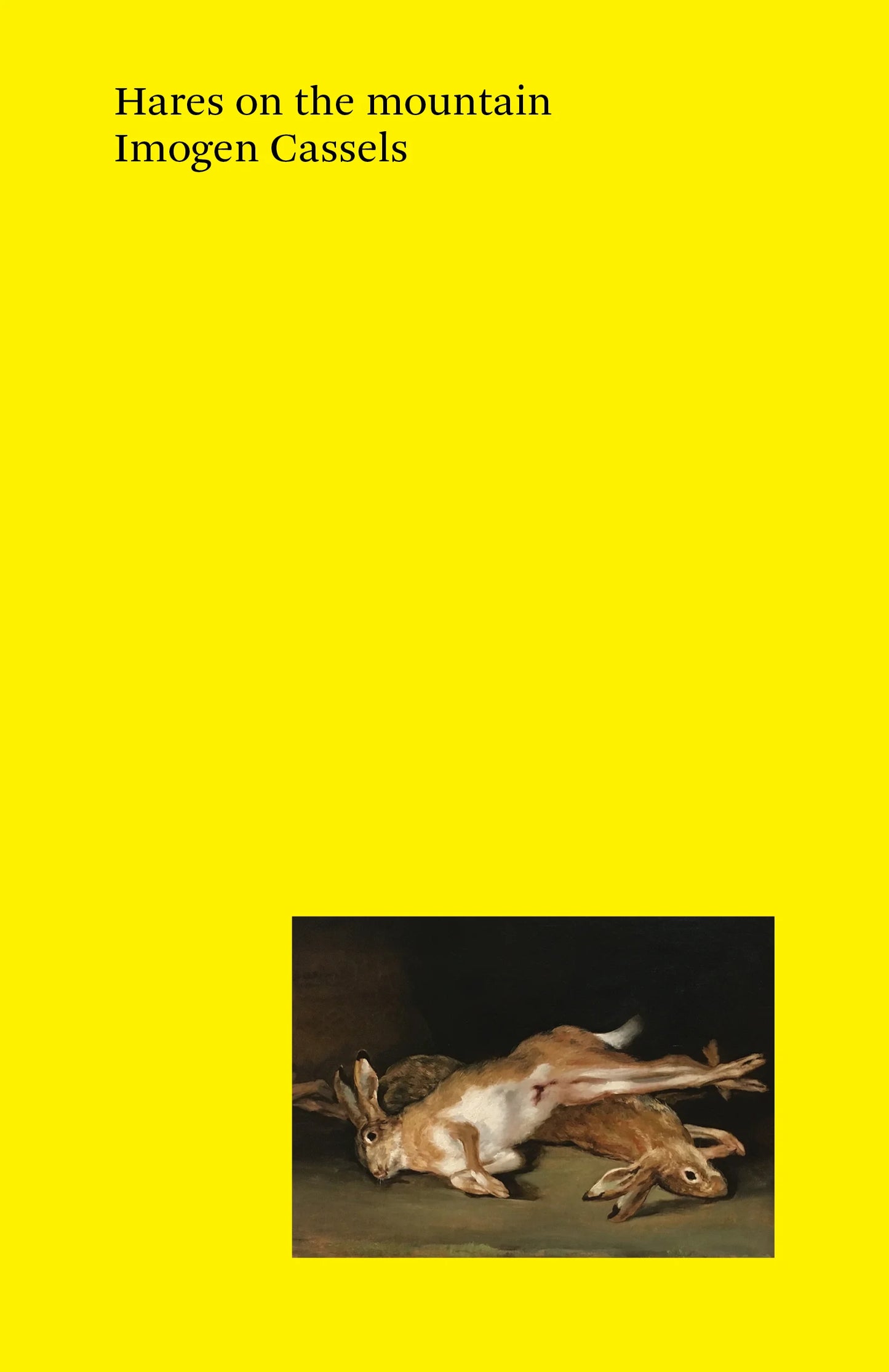
Hares on the Mountain
Hares on the Mountain
Couldn't load pickup availability
Imogen Cassels
Imogen Cassels
'Reading Hares on the mountain sent me to Simone de Beauvoir, who writes that ‘The girl watches herself suffer: she is savouring in her heart the taste of violence and revolt rather than feeling any interest in their results’—there is something deeply feminine about Cassels’ poetry—the clichés de Beauvoir identified ‘moonlight, pink clouds and velvet nights … marble, jasper and mother of pearl,’ but there is also the decision to make an art of watching and of savouring the world when it does not adhere to these alluring projections. de Beauvoir puts imagining on the side of inertia, ‘she tells herself silly fairy stories. She sinks so often into such foolishness because she has no hold upon the world; if she were supposed to act, she would have to see clearly, but she can wait in a fog.’ Cassels’ poems are precise, littered with birds and other creatures, as well as barrettes and briolettes, and while they describe waiting and absence, they are demonstrations of presence and attention. She charts being in a fog—and moving through it. As lyric, they slip and slide with astonishing clarity—they make slight and beautiful renderings of the world. I want to read and read again.'—Edwina Attlee
'Cassels is a fencer of a poet, nicking the throat of language while pivoting with adroit feet. Surely, I think, the poems in Hares on the mountain are the lost songs of Wyatt’s diamond-studded hind, or the dreams of cursive font. I gasp when I read them, knowing Cassels has once again shredded breath into meticulous and exquisite evasion.'—Jennifer Soong